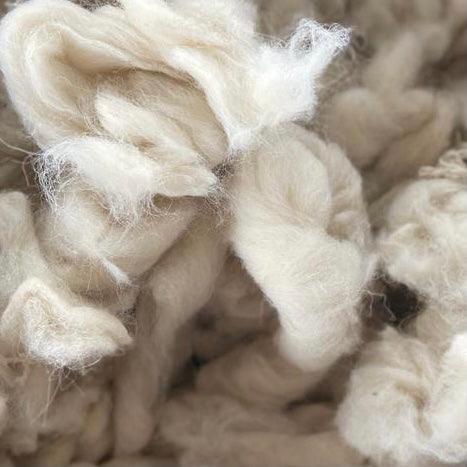
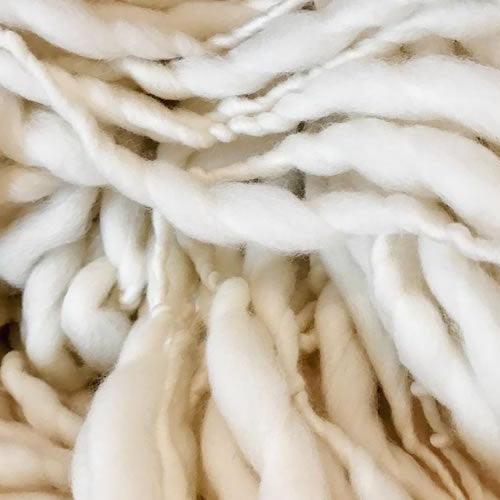
Sheep wool: properties and origin
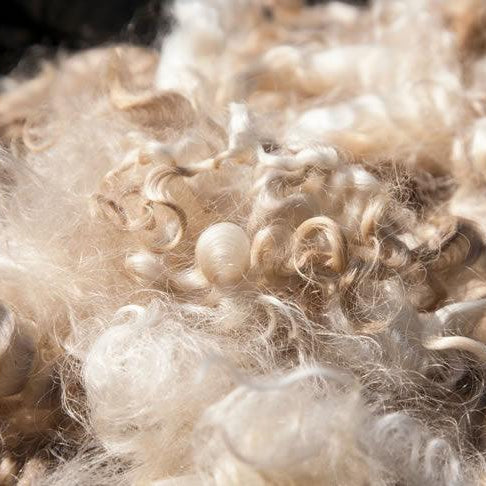
Our goal is to share the textile art of South America's natural fibres.
Sheep wool is the signature fibre of the Puna, in northern Argentina. Women artisans work mainly with the wool's natural colours and master complex weaving techniques passed down from generation to generation. The wool is bought directly in the villages where the producers live.
From sheep to finished piece
In the Puna communities, llama and sheep farming is encouraged for meat and fibre, which is then turned into handmade textiles. The process has several stages: raising and caring for the animals, shearing, cleaning the wool and spinning it. The women also dye the yarn with natural dyes to obtain different colours, and weave the pieces on a loom or with needles. Small organisations and communities in Argentina have been doing this work for generations.
Shearing and wool production
In South America sheep are shorn once a year, and the wool grows back over twelve months until the next shearing. Shearing is done by hand, with shears, by specialists.
Properties of sheep wool
Strong – elastic – flexible – soft – comfortable – dirt-repellent
- Strong: it can stretch a long way before breaking.
- Elastic: after stretching it returns to its natural length, which is why garments keep their shape.
- Hygroscopic: it absorbs moisture from the air when it is humid and releases it when it is dry. Its fibres can absorb up to 50% of their weight in water.
- Insulating: thanks to the shape of its fibres, it insulates well against cold and heat, and wool clothing does not stick to the body.
- Durable and easy to care for: it adapts to any shape without breaking, drapes beautifully and repels dirt, so it is easy to clean.
Our sheep wool products
We use sheep wool, hand-loomed in Argentina, for our cushions: unique pieces in natural tones for the living room or bedroom.